28th CINet Conference
Creating what comes next
12-14 September 2027, Gothenburg, Sweden
Call for papers
The Creativity and Innovation Management Network (CINet) is a global inclusive community of researchers, educators, and practitioners who share a common interest in understanding, enabling, and managing creativity and innovation in all their forms.
The 28th CINet conference will take place in Gothenburg, Sweden, hosted by the Department of Technology Management and Economics at Chalmers University of Technology, on 12-14 September 2027.
Theme
The 28th CINet conference will explore the theme "Creating what comes next". The theme reflects an understanding of the future as something that is shaped through deliberate and continuous effort, rather than something that can simply be forecast. Organizations in both the private and the public sector are expected to contribute to the green transition and to make use of rapidly developing digital technologies, including generative AI, while still delivering value today. What comes next is rarely the result of a single breakthrough. It is created through the ability to innovate continuously, to collaborate across organizational boundaries and to make sound decisions when the future is uncertain.
The theme invites contributions on how organizations imagine, select and realize new products, services, processes and ways of organizing, and on how today’s innovations become the conditions for tomorrow. It also invites reflection on who takes part in creating what comes next, and on how the benefits and risks of innovation are distributed.
Gothenburg and Chalmers offer a fitting setting for these questions. The region is home to the headquarters of globally active industrial firms such as Volvo Cars, AB Volvo and SKF, and has a long tradition of collaboration between industry, academia and the public sector. Creating what comes next is also the ambition expressed by Chalmers University of Technology in its focus on developing skills, science and solutions for a world in progress.
The conference provides a platform for researchers and practitioners to share theoretical insights, empirical findings and practical experience on how creativity and innovation can create what comes next in ways that are economically, socially and ecologically sustainable.
Session tracks
The 28th CINet conference invites rigorous research-based papers and research notes, as well as practitioner presentations, aimed at developing theory and/or practical recommendations related to the conference theme "Creating what comes next", including:
-
Strategizing for Creativity and Innovation under Uncertainty
How do organizations create what comes next when technologies, markets, societal needs and regulatory conditions are constantly changing? How can organizations formulate and adapt innovation strategies when the future cannot simply be forecast? Topics include strategic foresight, scenario planning, innovation portfolios, experimentation, and the balance between exploring emerging opportunities and exploiting existing capabilities. -
Innovation Ecosystems and Collaboration for Creating what comes next
This track will explore how firms, universities, public actors and start-ups create and capture value together. Topics include open innovation, ecosystem governance, platforms, co-creation and how risks and benefits are shared among partners. -
Generative AI and the future of Creativity and Innovation
Generative AI is changing how organizations imagine, develop and evaluate what might come next. This track explores for example how generative AI changes idea generation, product development and innovation decision-making. -
Organizing, Leadership and Adaptive Capabilities
This track focuses on how organizations build and sustain the capability to foster creativity and innovation. This includes ambidexterity, agile and hybrid ways of working, project-based organizing, innovation culture and the leadership of change. -
The Front End of Innovation - Imagining, Selecting and Shaping what comes next
This track explores creativity and decision-making in the early and uncertain phases of innovation, when alternatives are still open and choices can shape future development trajectories. Topics include idea generation and selection, design thinking, idea management, experimentation, decision-making under ambiguity, and the transition from early concepts to innovation projects. -
Digital Transformation, Servitization and the Creation of New Value
Digital technologies are reshaping how industrial firms create value today and what they may be able to offer tomorrow. This track will explore how data and digital technologies reshape offerings, operations and business models. Topics include product-service systems, digital twins, data-driven decision-making and technology transfer between research and industry.
In addition, papers addressing a broader set of themes within creativity and innovation are welcome. These themes include:
- Creativity and innovation strategies, practices and performance.
- Creativity and innovation in products, services and operations.
- Organizing for creativity and innovation.
- Innovation with external partners.
- Management of ideas and creativity.
- Design thinking and innovation management.
- Creativity and innovation in public settings.
The format
CINet accepts:
- "Full papers" of up to 6,000 words, to report research that has been completed.
- "Research notes" of up to 2,500 words, to propose a research idea, seek research collaboration, present a literature review, describe a research design, or report work-in-progress.
- Practitioner presentations, primarily focused on sharing and discussing (continuous) innovation practice and experience.
By accepting shorter full papers, we facilitate the development of your work into journal articles, while avoiding self-plagiarism. Furthermore, CINet wants to be a place where not only completed research but also ideas for research or collaboration and different stages of work-in-progress are presented and discussed. The "research notes" support the latter purpose. And, last but not least, CINet want to be the place where theory and practice meet. The submission of ideas for practitioner presentations will be greatly appreciated.
Paper development workshop
While most papers presented at the conference are not ready for publication, many provide a good starting point but require additional work before they are publishable. So, true to its nature, CINet selects a number of papers for possible development into a special issue paper, based on their potential and, then, organizes one or more paper development workshops, in the form of a Teams or Zoom event. In these workshops, which will take place late October or early November 2027, the special issue editors will work together with experienced reviewers, to help the invited authors to develop their paper to publishable standard.
Best paper awards
Every year, CINet selects two award-winning papers: the John Bessant Best Paper Award and the Mariano Corso Best Practical Implications Award, the paper must meet the following criteria.
Special issues
The best papers presented at the conference will be considered for publication in a special issue of:
PhD Workshop
PhD students attending the conference can attend the 27th CINet PhD Workshop for free.
More information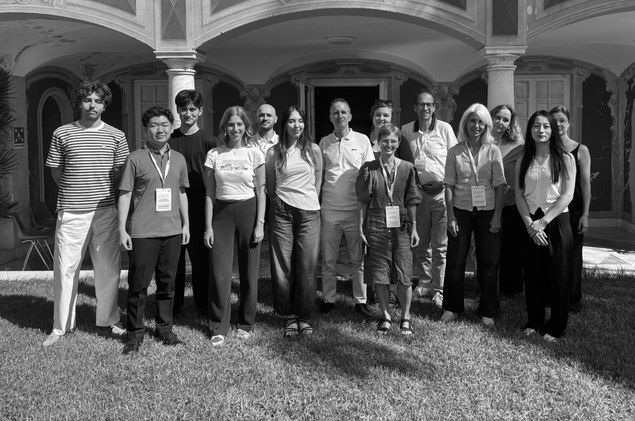
CINet Hot Topics
On the Sunday afternoon, just before the welcome reception, CINet will organize a session on hot and emerging topics in our research field.
More informationHosted by